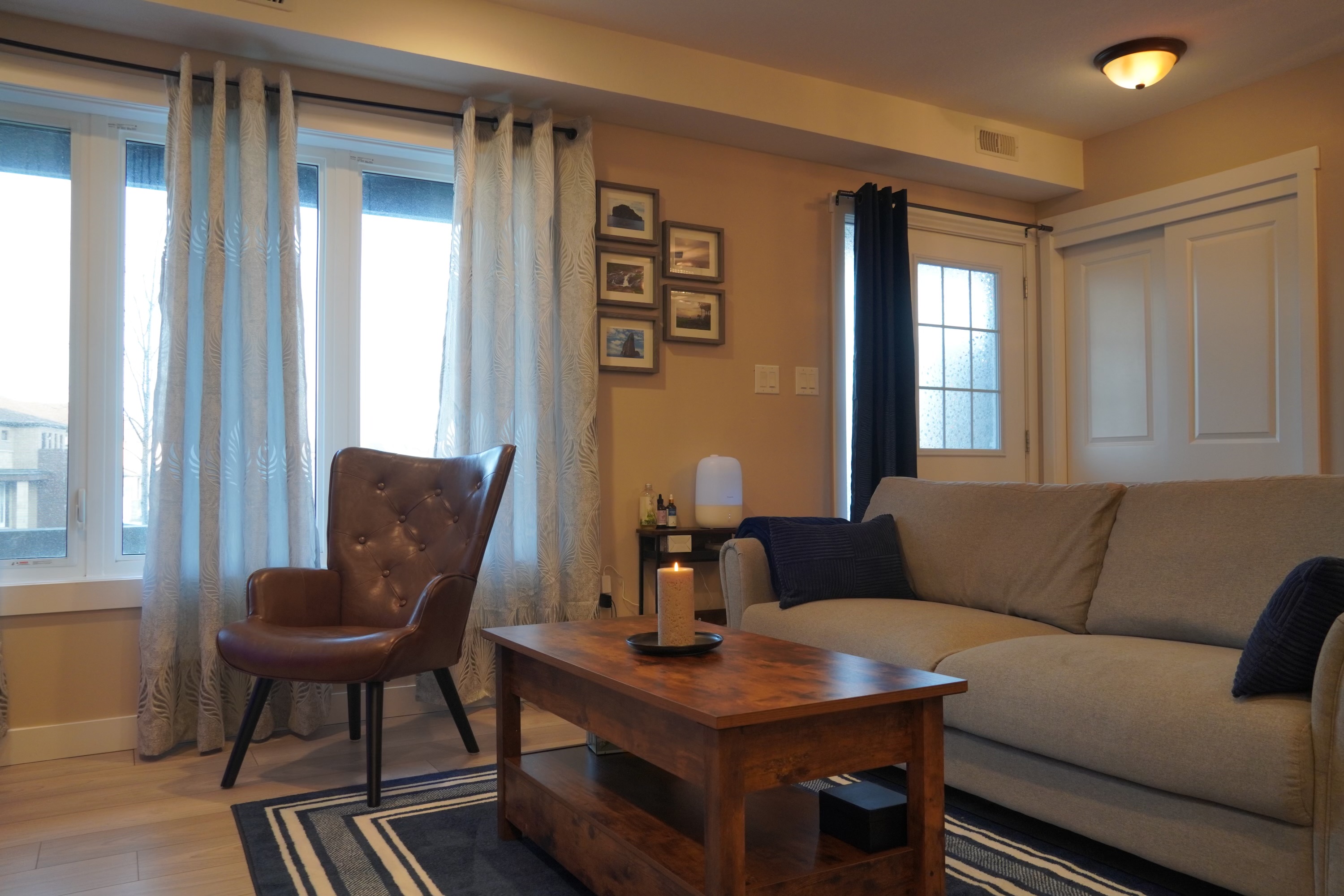
Every room needs a place where the eyes can land. Without it, the gaze bounces from object to object, never settling, never resting. It's like being in a conversation where no one takes the lead. Exhausting.
When I first assessed my client's living space, this was the primary problem I identified. Everything was equally important, which meant nothing was important. His eyes would enter the room and just... wander. He didn't realize how much energy that wandering cost him until I created an anchor.
The anchor I chose was a clock. A large industrial gear clock that became the centerpiece of the room. When I hung it on the wall, something shifted. Suddenly, when my client walked into the room, his eyes knew exactly where to go.
What Anchoring Does to the Brain
When the eyes have a clear place to land, the brain relaxes. It doesn't have to make a decision about where to look. The focal point makes that decision for you.
Think about how tiring it is to be in a cluttered antique shop versus a gallery with one painting on each wall. Same number of interesting things, maybe. But the gallery tells your eyes: look here, then here, then here. The antique shop says: look everywhere at once. One feels like a walk. The other feels like a workout.
An anchor doesn't have to be big. It doesn't have to be expensive. It just has to be intentional. It has to say, clearly and quietly: I am the center. Start here.
Why Industrial Design Works
I chose industrial design for this anchor because industrial objects have a kind of honesty. A gear clock doesn't pretend to be anything other than what it is. The gears are visible. The mechanism is exposed. There's no decoration hiding the function.
For sensitive minds, this honesty is calming. There's nothing to wonder about, no need to decode symbolic meanings or appreciate artistic choices. The clock is gears and numbers and hands that move. It does one thing, clearly.
Industrial precision also creates visual weight. The metal, the dark finish, the geometric shapes—these elements pull the eye. They have presence without chaos. The clock feels substantial and grounded, which makes it effective as an anchor.
The Placement Principle
Where you put an anchor matters as much as what you choose. I learned this through careful experimentation with my client's space.
Too high, and the eyes have to travel up to find it—that feels unnatural. Too low, near the floor, and it competes with furniture. I found the right height: slightly above eye level, on a wall with nothing else competing.
The rule I follow: an anchor should be visible the moment you enter the room, without searching. If you have to scan to find it, it's not anchoring anything.
I also ensure anchors have breathing room. When I first considered the clock placement, there was a shelf nearby with books and plants. The clock would have been fighting for attention. I cleared that wall, giving the clock space to do its job. Space to be important.
Anchors in Every Room
Once I understood the power of anchoring, I implemented it throughout my client's home.
In the bedroom, the anchor is the headboard. The tufted grey fabric draws the eye the moment you enter. Everything else in the room supports it: the matching nightstands, the coordinated bedding, the clear walls that don't compete.
In the bathroom, the anchor is the over-toilet hutch with its folded towels. It's the tallest element, and the color coordination makes it stand out. When my client walks in, his eye goes there first, then can rest.
In the kitchen, the anchor is the globe chandelier. It hangs at the center of the space, and its shape is unlike anything else in the room. Round among rectangles. Glowing among matte surfaces.
Each anchor is different, but they all do the same job. They give the eyes permission to stop searching.
Creating Your Own Anchor
If your room feels chaotic or tiring, try this: stand in the doorway and notice where your eyes go first. If they bounce around, you need an anchor.
Choose something with visual weight. This could be size, color, texture, or contrast. A large painting. A distinctive piece of furniture. A mirror with an interesting frame. Something that says: I am here.
Then clear the competition. Remove or reduce the objects near your anchor. Give it space to command attention. If you have three things competing to be the focal point, you have zero focal points.
Finally, check your placement. The anchor should be visible immediately upon entering. It should feel natural to look at, not forced. If you have to crane your neck or search the room, adjust the height or location.
The goal isn't to create a showpiece. The goal is to give the eyes a home base. A place to start. A place to return when the visual wandering gets tiring.
That gear clock isn't the most valuable thing in my client's home. It's not the most beautiful. But it might be the most useful. Every time he walks into that room, his eyes know exactly what to do. And that knowing, that certainty, is worth more than words can express.