When my client first showed me his home office, the chair told me everything I needed to know. It was a cheap black mesh thing from an office supply store. Functional. Forgettable. He'd been working in it for three years, not thinking chairs mattered that much.
But then came the back pain. Then the shoulder tension. Then something else he hadn't connected: when his body was uncomfortable, his mind was uncomfortable too. The physical irritation became mental irritation. He couldn't focus. He couldn't settle. He blamed stress, workload, even the weather. He blamed everything except the chair he sat in for eight hours a day.
Changing that chair was one of the most impactful decisions in the entire redesign.
The Body-Mind Connection I Design Around
Here's what I understand about high-performing professionals like my client: body and brain are not separate systems. They're one system. When the body feels wrong, thoughts feel wrong. When the body feels supported, thoughts feel clearer.
This might seem obvious, but most people ignore it. They treat the body like a vehicle for carrying the brain around. Feed it, rest it, sit it somewhere. As long as it's not actively complaining, they assume it's fine.
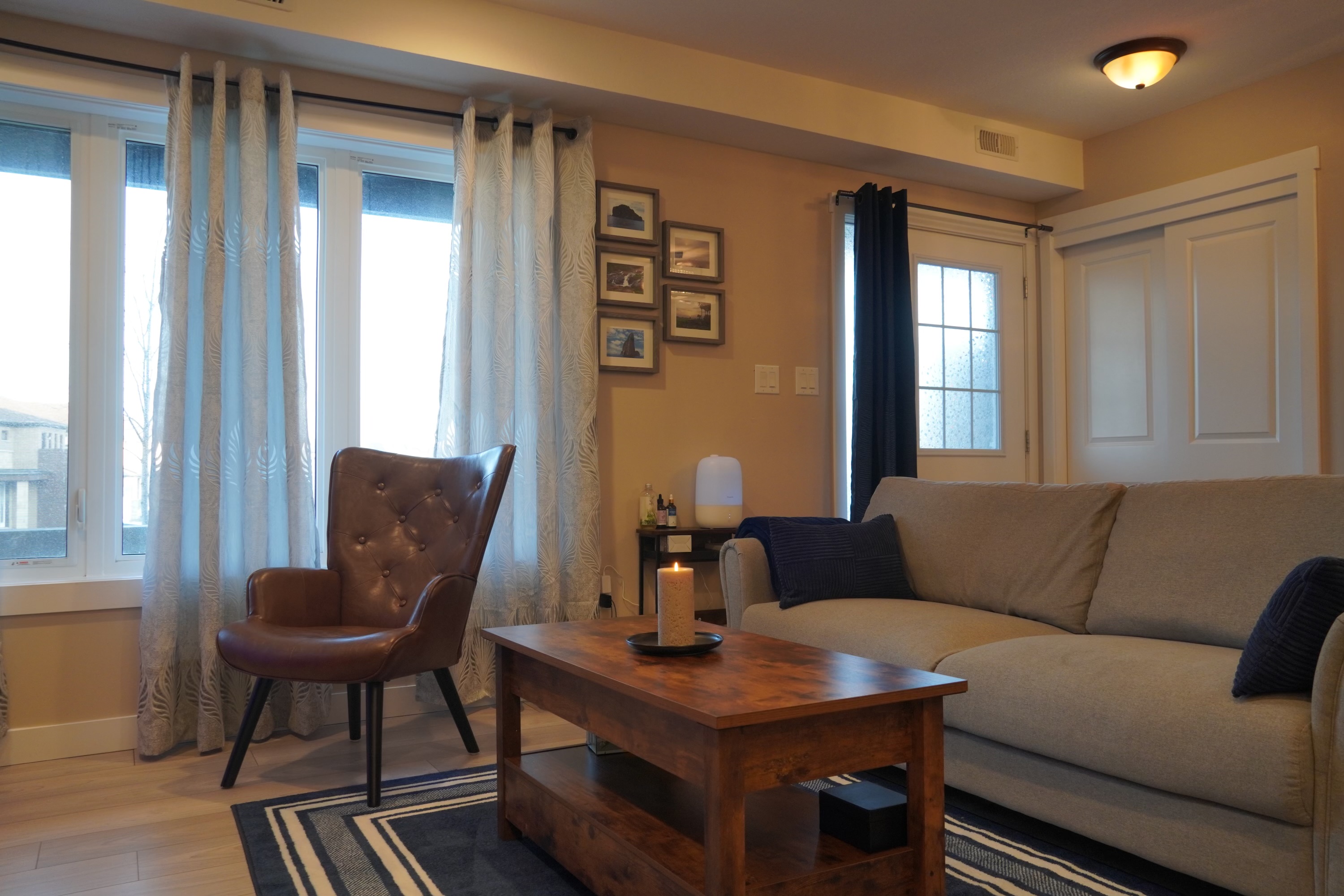
The leather chair I selected taught my client otherwise. The first day he sat in it, something shifted. His spine found its natural curve. His arms rested at the right height. His feet sat flat on the floor. And his brain, for the first time in months, felt like it could settle.
He hadn't realized how much noise his body was creating. Not audible noise. Sensation noise. Constant small signals of discomfort that his conscious mind was filtering out but his deeper brain was still processing.
The right chair silenced that noise.
Why I Specified Leather
I chose leather for specific reasons. Not because it looks expensive. Not because it matches some aesthetic ideal. Because of how it feels.
Leather breathes differently than mesh or fabric. It warms to body temperature. In winter, it doesn't feel cold. In summer, it doesn't trap heat the same way fabric does. The temperature regulation is subtle but real.
Leather also has a particular texture that many people find calming. When my client is thinking through a difficult problem, he sometimes runs his hand along the armrest. The smooth surface, slightly cool, slightly firm, gives his nervous system something steady to touch.
And leather ages. It develops character. His chair looks slightly different now than when he bought it. The places where he rests his arms have softened. The seat has molded to his shape. The chair has become his in a way that plastic and mesh never could.
The Ergonomic Non-Negotiables
Looking good means nothing if the chair hurts you. Here's what I specified:
Lumbar support that actually supports. Not a pillow strapped to the back. Real curvature built into the chair that meets the lower spine where it naturally curves inward. When my client leans back, his spine finds support without searching.
Adjustable height so feet can sit flat. When I first assessed his desk setup, the old chair was too low. His knees were above his hips, which tilted his pelvis and strained his back. Raising the new chair two inches solved a problem he didn't know he had.
Armrests at the right height. Too high, and shoulders hunch. Too low, and arms dangle. The sweet spot is where elbows bend at ninety degrees and shoulders can drop completely.
A seat that's deep enough but not too deep. He needs to sit with his back against the lumbar support and still have space between the seat edge and the back of his knees. Too short, and he slides forward. Too deep, and his back loses contact with the support.
The Aesthetic Integration
Here's where many people go wrong: they choose ergonomic chairs that look like medical equipment. Black mesh. Plastic frames. Wheels that look industrial. These chairs might support the body, but they don't support the mind.
When my client walks into his office, I want him to feel calm. An aggressive-looking gaming chair or a clinical office chair would not create that feeling. They would create the feeling of being in an office. Not his office. An office.
The leather chair integrates with his space. The warm brown color connects to the wood of his desk. The traditional shape fits with the professional atmosphere I built for him. When he looks at the chair, he doesn't see a piece of equipment. He sees furniture that belongs in his home.
This matters more than people realize. Visual harmony contributes to mental calm. A chair that sticks out, that doesn't belong, creates a subtle friction every time you see it. A chair that fits becomes invisible in the best way.
The Investment Conversation
Good chairs cost money. The leather chair I selected cost more than the cheap mesh one he'd been using. Some people would say he overspent.
But here's how I frame it: he sits in that chair for six to eight hours every working day. Over a year, that's around two thousand hours. Over five years, ten thousand hours. The cost per hour of use is almost nothing.
More importantly, the cheap chair was costing him in ways he couldn't see. Back pain. Mental fatigue. Inability to focus. Lost productivity. How much money did he lose because he couldn't think clearly in an uncomfortable chair?
The exact number is unknowable. But the leather chair paid for itself within the first month of better work.
Finding Your Chair
If you're in the wrong chair, you might not know it yet. The discomfort creeps up slowly. You adapt. You compensate. You blame other things.
Here's my suggestion: pay attention to your body at the end of a work day. Are your shoulders tight? Is your lower back aching? Do you feel physically drained beyond what the mental work explains?
Now sit in a properly ergonomic chair for a week. Notice the difference. Your body will tell you what it's been missing.
The chair doesn't have to be leather. It doesn't have to match my taste. It just has to support your body and fit your space. Function and beauty. Ergonomics and aesthetics. Both matter. Both serve the same goal: a body at ease, so a mind can work.