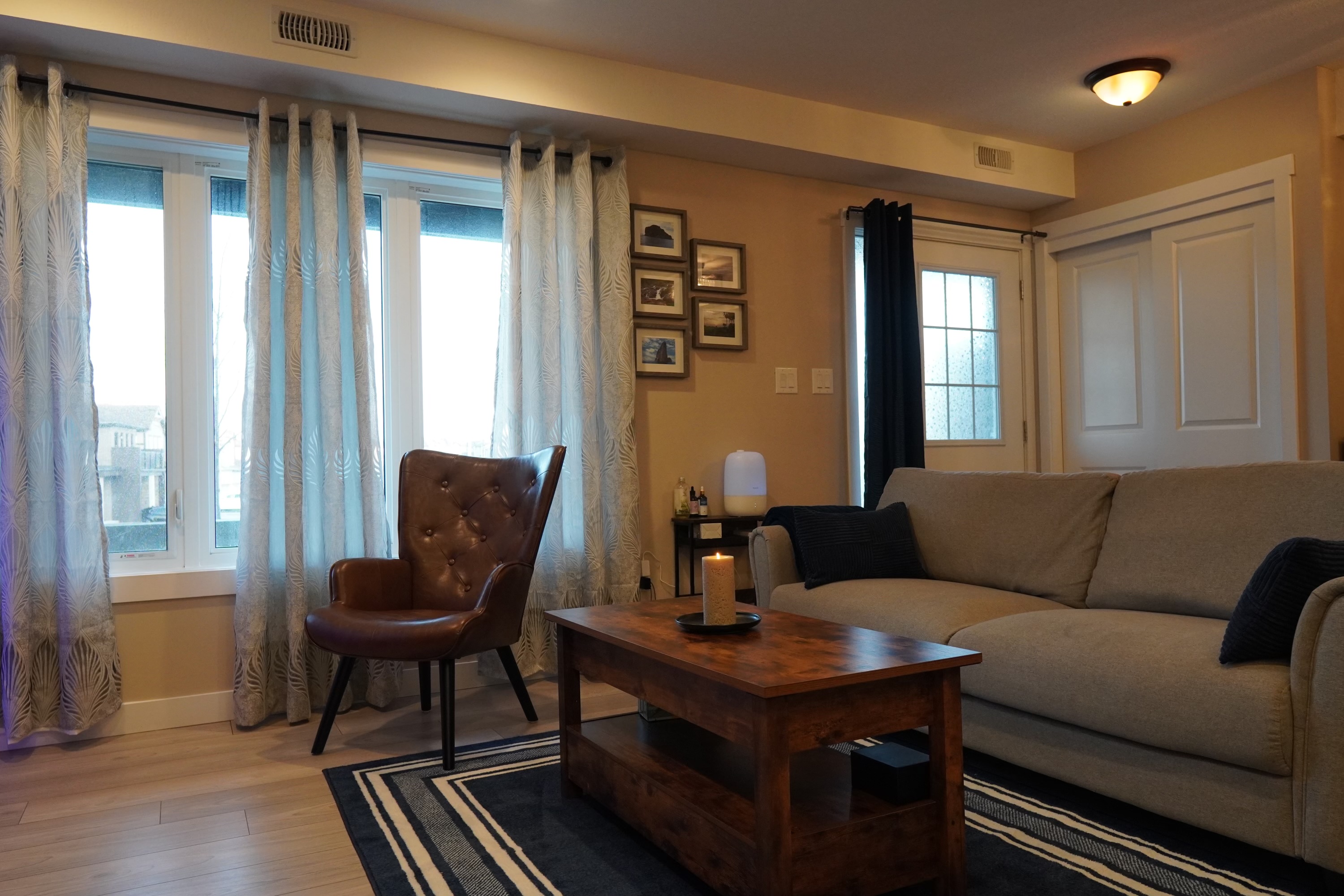
One light source isn't enough. Not for a living space. Not for a brain that notices everything.
When a room has just one type of light—just overhead, just lamps, just whatever—the space feels flat. The eyes have nothing to compare. There's no depth, no variation, no interest. It's like eating food with no seasoning. Technically sufficient. Experientially boring.
That's why I layer light temperatures in every living room I design. Warm and cool. Fire and LED. Different colors doing different jobs in the same room.
What Light Temperature Means
Every light has a color, even if you don't notice it. Warm light looks yellow or orange. Cool light looks white or blue. This is measured in something called Kelvins, but the numbers don't matter as much as the feeling.
Warm light feels intimate. It's the color of fire, of sunset, of evening. It tells the brain: relax, settle, nothing urgent.
Cool light feels alert. It's the color of midday, of overcast sky, of waking up. It tells the brain: pay attention, stay sharp, work to do.
Most rooms commit to one or the other. Warm everywhere or cool everywhere. This creates consistency, which sounds good but actually flattens the experience.
My client's living room mixes both. And that mixture creates something neither could alone.
The Candle Strategy
I always include candles in my living room designs. Real candles with real flames. Not for decoration. For temperature contrast.
A candle flame is the warmest light available. Lower than any bulb. More orange than any LED. When a candle is lit in a room with cooler lighting, something happens to perception. The space gains depth.
The candle becomes the warmest point. Everything else is cooler by comparison. The eye travels between them, registering the difference. This travel, this comparison, creates a sense of dimension that single-temperature rooms don't have.
I placed candles on my client's coffee table. When evening comes, he lights them. The flame flickers next to the steady blue of the LED behind his TV. Warm next to cool. Old technology next to new. The contrast is subtle but his brain notices it, and noticing it is part of what makes the room feel alive.
The LED Layer
The blue LED behind my client's television is cool light. Not cold, not harsh, but definitely on the cool end of the spectrum. It creates ambiance and signals transition to his nervous system.
But blue alone would feel sterile. Hospitals use cool light. Offices use cool light. A living room is not a hospital or office. It needs warmth too.
That's where the candles come in. And the lamp with the warm bulb. And the overhead light dimmed to its warmest setting.
The LED provides a constant cool anchor. The other lights provide warm contrast. Together they create a range—a spectrum of temperature that gives the eyes variety without chaos.
How I Balance the Mix
The balance matters. Too much cool light and the room feels clinical. Too much warm light and it feels sleepy. I aim for something in between: alert enough to be awake, calm enough to rest.
My formula: one cool light source (the LED), two or three warm sources (candle, table lamp, dimmed overhead). The warm outweighs the cool in quantity but not in impact. The cool light anchors the room while the warm light softens it.
I also design for adjustment based on time and mood. Earlier in the evening, more cool light. Later, more warm. If my client is watching something engaging, cooler balance helps him stay attentive. If he's winding down for bed, warmer balance helps him relax.
The beauty of layered lighting is flexibility. He can shift the whole mood of the room by dimming one source or brightening another.
The Practical Setup
Here's what I specified for my client's living room:
One LED strip behind the TV. Blue-white, dimmable, usually at about thirty percent in the evening.
One table lamp with a warm bulb. I specifically chose a bulb rated at 2700K, which is quite warm. This sits next to the sofa and provides reading light when needed.
Two candles on the coffee table. He lights these in the evening, not always both, sometimes just one. Real flame, real warmth.
Overhead lighting on a dimmer. At full brightness, these lights are cooler. Dimmed down, they shift warmer. Usually kept at thirty to forty percent in the evening.
This combination gives the full range. Cool to warm. Alert to restful. Adjustable for any mood or moment.
Why This Matters for Sensitive Minds
For people who notice everything, lighting is not a background element. It's a foreground experience. Harsh lights cause discomfort. Flat lights cause restlessness. Wrong lights cause subtle ongoing stress.
Layered lighting works for sensitive brains because it provides variety without chaos. There's enough difference to engage the eye. There's enough consistency to feel organized. The layers create interest without creating noise.
I've been in rooms where the lighting made me want to leave. Too bright. Too blue. Too unforgiving. I've been in rooms where the lighting made me want to sleep. Too dim. Too warm. Too monotonous.
My client's living room avoids both extremes. The fire gives warmth. The LED gives coolness. Together they create a space where he can be alert and calm at the same time. Which is exactly what he needs.