Light is medicine. Every designer knows this. Natural light lifts mood, regulates sleep, and makes spaces feel alive. But natural light also has a dark side: exposure. Glare. The feeling of being watched.
When I designed my client's living room, I faced this tension directly. He wanted bright, open spaces filled with daylight. He also wanted to feel safe and private in his own home. Most window treatments force a choice: either block the light for privacy or sacrifice privacy for light.
Sheer curtains solve this problem. They diffuse without blocking. They soften without dimming. They create privacy without creating caves.
The Problem with Naked Windows
Before I started, my client had nothing on his windows. Just glass. During the day, the room was flooded with light—sometimes too much light. Harsh afternoon sun would create glare on the television and hot spots on the furniture. His eyes would strain against the brightness.
At night, the problem reversed. The glass became a mirror from outside. Anyone walking by could see in. He felt exposed in his own home, reluctant to walk around freely, aware that he was on display.
He tried blackout curtains for a while. They solved the privacy problem but created a new one: the room felt like a bunker. Dark. Heavy. Disconnected from the outside world. He found himself keeping the curtains closed all day because opening them felt like work, and the room suffered for it.
The windows needed treatment that worked with the light, not against it.
How Sheer Fabrics Diffuse
Sheer curtains are thin enough to let light through but dense enough to scatter it. The result is diffused light—soft, even, without harsh shadows or glare.
Think of the difference between a bare lightbulb and a frosted one. Same light source. Completely different quality. The bare bulb creates sharp shadows and can be painful to look at directly. The frosted bulb glows. It illuminates without aggressing.
Sheer curtains do this for windows. The sun becomes a glow rather than a glare. The room stays bright, but the brightness becomes gentle.
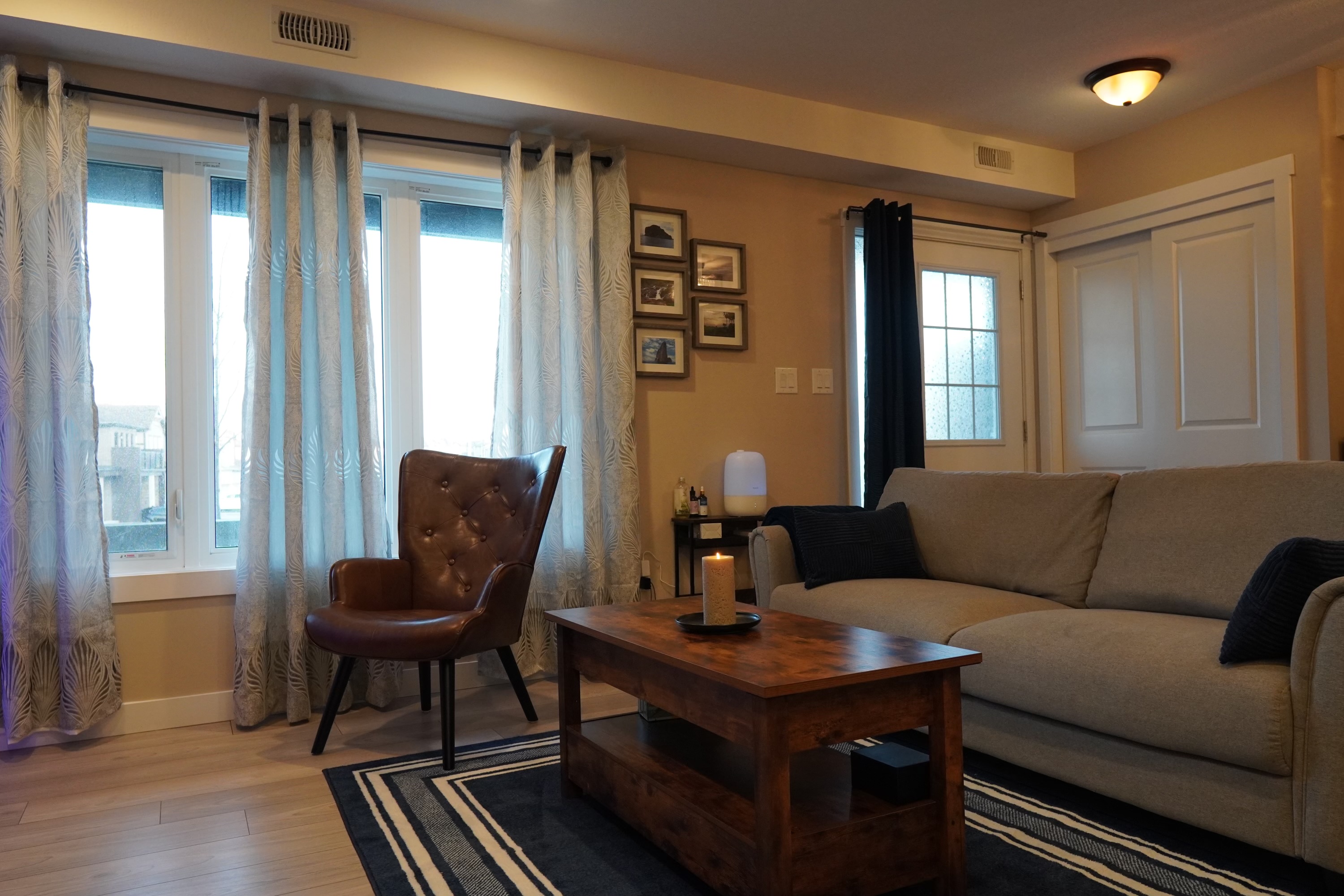
For my client's living room, I chose a white sheer fabric with enough density to fully diffuse direct sun. When closed during the day, the sheers transform harsh light into ambient glow. The room feels lit from everywhere rather than from one aggressive source.
The Privacy Paradox
Here's what surprises most people about sheer curtains: they provide more privacy than expected.
During the day, when it's bright outside and darker inside, sheers block almost all visibility from outside. People walking by see white fabric, not the room behind it. The physics works in your favor—light doesn't penetrate from bright to dark as easily as it penetrates from dark to bright.
At night, this reverses. When interior lights are on and it's dark outside, sheers become more transparent. Someone outside could see movement, shapes, general activity.
For my client, this was acceptable. He lives on a quiet street with no close neighbors. The evening transparency wasn't a concern. But I always explain this physics to clients before recommending sheers. If nighttime privacy matters, you need layered window treatments: sheers for daytime, heavier curtains or blinds for evening.
The Installation Details
How you hang sheers matters as much as which sheers you choose.
I mounted the rod close to the ceiling, several inches above the window frame. This draws the eye up and makes the ceiling feel higher. When the sheers hang from that height, they create a full wall of fabric rather than a window-sized patch.
I also extended the rod beyond the window edges. When open, the sheers stack against the wall rather than covering the glass. This means full light access when desired, with full coverage available by simply pulling the sheers across.
The length matters too. I brought the fabric all the way to the floor with a slight break—just touching, not puddling. This creates a clean line and a sense of completeness. Short curtains that end above the floor always look temporary, unfinished.
The Color Choice
White. Almost always white.
I know that seems boring. But white sheers do something no other color can: they disappear. They become part of the light rather than an object in front of it. The eye sees through them to the window and the view beyond.
Colored sheers call attention to themselves. Even soft cream or beige becomes a statement. For a living room where calm is the goal, I want the window treatment to be invisible. I want the light itself to be the feature.
White also reflects the most light back into the room. The sheers become secondary light sources, bouncing daylight deeper into the space. This is especially valuable in rooms that don't get direct sun—the sheers help distribute what light exists.
Combining with Blue LED
In my client's living room, the sheer curtains interact beautifully with the blue LED lighting I installed behind the television.
During the day, the sheers create a white glow that feels clean and alert. As evening approaches, my client closes the sheers fully and turns on the blue LED. The soft white fabric picks up the blue light, creating a subtle cool cast throughout the room.
This transition mirrors the natural shift from day to evening. The sheers, which worked with daylight during the day, now work with the designed light of the evening. The room's mood transforms without the sheers changing at all.
What Sheer Curtains Can't Do
I believe in being honest about limitations.
Sheer curtains won't help with sound. They're too thin to provide any acoustic dampening. If street noise is a problem, you need heavier materials—but those can layer behind sheers.
Sheer curtains won't fully block heat. They scatter light but let thermal energy through. In very hot climates with direct sun, sheers alone might not prevent overheating. Again, layered treatments can address this.
And as mentioned, sheer curtains don't provide nighttime privacy. If someone could see your windows from nearby after dark, and privacy matters, you need additional coverage for evening hours.
For my client's specific situation—a quiet street, moderate climate, daytime privacy needs—sheers alone were the right choice. For different situations, I'd recommend different solutions.
The Softening Effect
Beyond the practical benefits, sheer curtains do something harder to measure: they soften the entire room.
Every edge in a space is either hard or soft. Glass windows are hard—rigid, sharp, unyielding. Fabric is soft—flowing, gentle, alive. When sheers hang in front of windows, they transform hard edges into soft ones.
This matters for sensory experience. A room full of hard edges feels tense, institutional, demanding. A room with soft edges feels welcoming, residential, restful. The sheers are just one element, but they contribute to the overall feeling of comfort.
My client noticed this immediately. "The room feels friendlier now," he told me. He couldn't articulate exactly why. But I knew it was the softening of all those hard glass edges.
Choosing Your Sheers
If you want to try this in your own home:
Choose fabric dense enough to actually diffuse. Hold it up to a window in the store. If you can clearly see through it, it won't work. If everything behind it becomes a blur, it's right.
Choose white or the lightest possible neutral. You want the sheers to be light, not a color.
Mount high and wide. Ceiling height or close to it. Extending beyond the window frame on both sides.
Hang to the floor. The break—where fabric meets floor—should be just touching, with perhaps half an inch of extra length.
Consider the rod carefully. Simple, thin, unobtrusive. The rod should disappear. The fabric is the feature.
And remember that sheers work best in combination. Layering with blinds, heavier curtains, or blackout panels gives you the full range of options: bright and airy during the day, private and cozy at night.
Light is medicine. But like all medicine, the dose matters. Sheer curtains help you control the dose—getting the healing power of natural light without the side effects of glare and exposure.