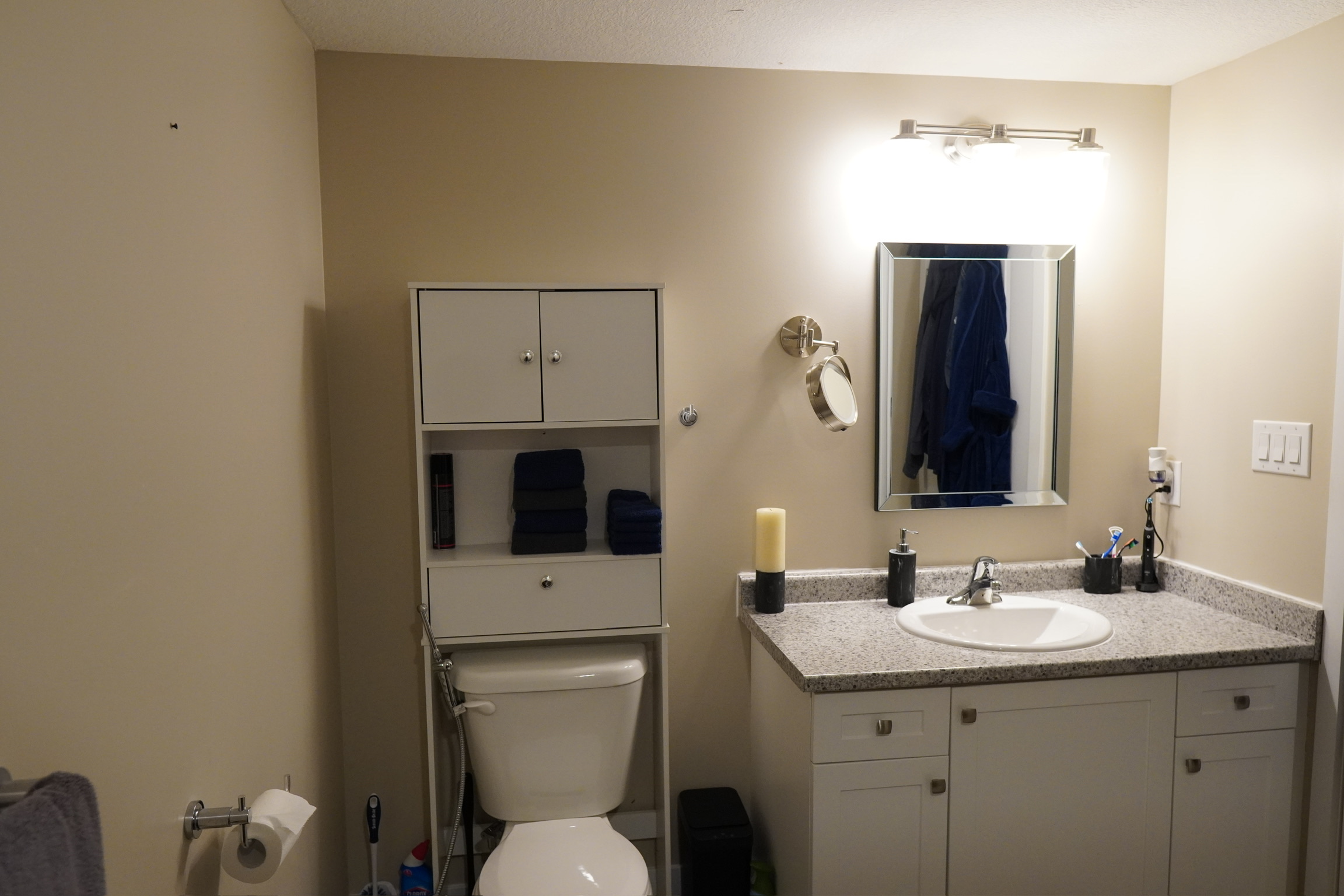
Most shower curtains are visual interruptions. Solid colors create a hard stop. Busy patterns create chaos. But a gradient—an ombré effect—does something different. It guides the eye like water flowing downward.
Why Gradients Work
The human eye is drawn to follow gradual transitions. When my client's eyes enter the bathroom, the ombré curtain doesn't stop them. It guides them in a gentle downward sweep, creating a sense of visual completion rather than interruption.
Gradients guide the eye naturally, like water flowing. No hard stops, no visual arguments—just smooth, calming transitions.
The Design Choice
I chose a curtain that transitions from light grey at the top to deeper charcoal at the bottom. This mimics natural light distribution—brighter above, darker below—which the brain interprets as correct and calming.
The effect is subtle but powerful. The bathroom feels taller, calmer, more intentional. The gradient becomes an organizing principle that the whole room responds to.
Implementation Tips
When selecting an ombré element for any space, ensure the transition moves in a direction that makes sense. Light to dark works top to bottom. The gradient should follow natural light patterns, not fight them.